Featured post

SalaamOne سلام

SalaamOne ,  سلام   is a nonprofit e-Forum to promote peace among humanity, through understanding and tolerance of religions, cu...

Showing posts with label Takfiri. Show all posts

Why is there such an explosion of violence across ME?

WHAT on earth has descended upon the Middle East? Why such an epic explosion of violence?

It feels strange to ask these questions of Dr Bouthaina Shaaban, one of Syrian President Bashar al Assad’s close advisers and former translator to his father, Hafez. Her office is spotless, flowers on the table, her female secretary preparing a morning round-up of the world’s press on the Middle East, the coffee hot and sweet.

At one point, when she spoke of the destruction in Syria and the mass attacks on the region’s Arab armies, it was difficult to believe that this was Damascus and that a few hundred miles to the east militants of the Isis (Islamic State of Iraq and Al Sham) have been cutting the throats of their hostages. Indeed, Shaaban finds it difficult even to define what Isis really is.

Not so with America and the war in Syria. “Right from the beginning of this crisis, I never truly felt that the issue was about President Assad,” she says. “It was about the weakening and destruction of Syria. There has been so much destruction — of hospitals, schools, factories, government institutions, you name it. I think the Americans take their battles against leaders and presidents only as a pretext to destroy countries.

“Saddam was not the real target — it was Iraq. And it’s the same for Libya now — America told everyone it was about Qadhafi. The real issue is about weakening the Arab armies, whoever they are.

“When the Americans invaded Iraq, what was the first thing they did? They dissolved the Iraqi army.”

Shaaban, of course, reflects Syria’s regime. Thus she calls the war a “crisis” and does not choose to reflect on the regime’s responsibility for this — or the numbers killed by the regime forces as well as by the rebels. What she does have is a very clear analytical brain which can shape an argument into coherence however much you disagree with her. She showed this in her research through Syrian presidential and foreign-ministry archives when she was writing a remarkable book about Hafez al Assad’s peace negotiations with the Clinton administration, in which the old “Lion of Damascus” turns out to be a lot shrewder than the world thought he was — and his betrayal by America much deeper than we suspected at the time.

‘ISRAELI SPRING’: She talks on about the destruction of the Iraqi army, the losses in the Syrian army, the massive suicide attack against Egyptian troops in Sinai and the killing of Lebanese troops in Tripoli. And you have to listen.

“Now all Arab armies are targeted — and the purpose is to change the nature of the Arab-Israeli conflict. The Arab-Israeli conflict is the crux of all that is going on in the Middle East. I am not saying these tactics will work.

“I am saying ‘they’ are targeting the Arab armies. The Egyptian army is very strong. It is a logical army that is defending its country. And then it received this huge attack in Sinai. It’s my opinion that the target is to eliminate the threat that Arab armies represent for the liberation of Gaza, the West Bank and to make Israel’s occupation easier and less costly.

“This is a major dimension of the cause of the ‘Arab Spring’. In fact I call it an ‘Israeli Spring’.”

Of course, it’s not difficult to argue with this. Why should the West — presumably the author of these Arab military calamities — want to weaken an Egyptian army which is, by proxy (or directly) protecting Israel itself? Why would the West want the new Iraqi armies to be crushed by Isis — which Shaaban, even though she is speaking in English, naturally refers to by its Arab acronym of ‘Daesh’? Why, indeed, would the West be bombing Isis if it wished to weaken the Syrian army?

“The Americans are the major power in the world and they are weighing this power. But what is ‘Daesh’? I feel it could be the thing it is now without financial and political help from leaders. How does it sell its oil and get its money? In Syria, we are under sanctions and we cannot transfer a penny through New York. So how does ‘Daesh’ get financed in such a huge way?

“Let me ask you something. When Mosul fell to ‘Daesh’, the Americans did nothing. The Americans intervened only when Kurdistan was threatened — which means the US supports the partition of Iraq. So the US move against ‘Daesh’ is a political move for other objectives. It’s interesting that the Syrian people in Ain al-Arab” — this of course refers to the Syrian Kurds in the Isis-besieged town they call Kobane — “have been more successful in fighting ‘Daesh’ than the Americans.”

Shabaan looks at me sharply. There is no mention of the constant US airstrikes against Isis around the town. But she is also contemplating the darkness of that throat-cutting institution, the woman stoned to death in Idlib, the extraordinarily effective propaganda campaign which it runs.

“This is propaganda made by very professional experts. There are professional media people involved. It is being ‘directed’ by professionals. And once those who are behind ‘Daesh’ achieve their goals, they can dispense with it, takeoff the black clothes and become a ‘moderate’ opposition.”

Shaaban laughs. She knows this is a clever conceit — the Middle East has been littered with monstrous “terrorist” organisations — the PLO, the Muslim Brotherhood, Abu Nidal — which have either been turned into pussycats or eliminated themselves.

(The first part of this article was published in Dawn on Saturday)
The next line I was waiting for. “And by the way, what is this ‘moderate’ opposition which is supposed to exist here in Syria? ‘The moderate armed opposition’, they say. How can someone who is armed and puts a gun to your head be a ‘moderate’? Our army is defending our people.” I interrupt.

The world would say that civilians have a right to bear arms when they are killed by the government’s forces. No reply.

The people of Syria fight for their president, she say. Morale is high, the destruction of their enemies — to the health and education systems and to the architectural heritage — is enormous. And so it goes on. President Bashar al Assad, needless to say, gets a clean bill of health.

But then Shaaban turns to Saudi Arabia, the “Takfirist” curricula in Saudi schools, the culture of head-chopping criminals in Saudi Arabia, its support for the Taliban. “It is a culture very similar to the ‘culture’ of ‘Daesh’. So why was ‘Daesh’ created?”

But as an Arab nationalist, does Shaaban want to restore the old Sykes-Picot colonial border between Syria and Iraq which Isis symbolically destroyed?

“I hope the new generation of Arab nationalists will break these borders and help to create a new Arab identity, the emergence of a different reality, to be a real player in international politics. I hope young Arabs will not cling to these borders.

“Why should Lebanese and Syrians have to stop at their border when the terrorists can move freely across? As Arabs, we should sit down and think how we can face these challenges together. There is a master-plan, a ‘maestro’ — yes, I know people say that this is a ‘conspiracy theory’. But what I’m saying is that the conspiracy is no longer a ‘theory’ — it is a reality we must confront together.”

This was a bit like the end of a long symphony concert, the rousing send-off as Arab nationalism is reborn. Surely that is what the original Syrian Ba’ath party was supposed to be about.

Shaaban condemned Turkey for its “lies” and President Erdogan’s desire for another “Ottoman military hegemony” in the Middle East.

She takes comfort from the ease with which Sunni refugees from Idlib and Aleppo have settled among Alawites and Christians around Lattaki and Tartous — although she at no point names these religious groups.

And she talks about the vast number of families who have lost loved ones — no blame attaching to anyone at this point — but then she utters an irrefutable truth. “When you kill a member of a family, you kill the whole family.” And there really is no answer to that one.

By Robert Fisk
By arrangement with The Independent
Dawn.com

Deoband issue: A fatwa against terrorism

For the first time ever, Islamic seminary Darul-Uloom Deoband issued a fatwa against terrorism on Saturday, stating Islam had come to wipe out all kinds of terrorism and to spread the message of global peace. The Darul-Uloom had denounced terrorism for the first time in February, but had not issued a fatwa so far. (Watch )
Saturday's fatwa, signed by Darul-Uloom's grand mufti Habibur Rehman, asserts that "Islam rejects all kinds of unjust violence, breach of peace, bloodshed, murder and plunder and does not allow it in any form".
Citing the "sinister campaign" to malign "Islamic faith...by linking terrorism with Islam and distorting the meanings of Quranic Verses and Prophet traditions", Mahmood Asad Madani, leader of Jamiat Ulema-e-Hind, had wanted Deoband to spell out the stand of Islam on world peace.
The fatwa, issued before a huge gathering of Muslims in Delhi's Ramlila Ground for the Anti-Terrorism and Global Peace Conference, went on to say, "It is proved from clear guidelines provided in the Holy Quran that allegations of terrorism against a religion which preaches and guarantees world peace is nothing but a lie. The religion of Islam has come to wipe out all kinds of terrorism and to spread the message of global peace. Allah knows the best."
The conference was addressed by Jamiat chief and Darul-Uloom's deputy rector Hazrat Maulana Qari Sayed Mohammed Usman.
He called the conference historic as Muslims of different sects and ideologies — including Nadwatul Ulama Lucknow, Jamaat-e-Islami Hind and All India Muslim Personal Law Board — ratified the fatwa against terrorism.
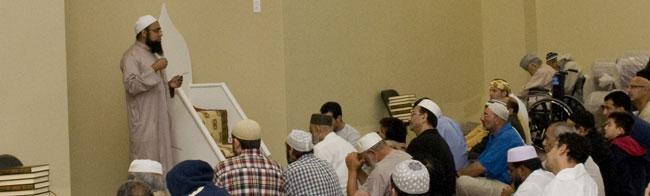
The exclusively-male turnout that read an "oath of allegiance" to the fatwa cheered most lustily as speakers attacked the US.
Jamiat Ulema-e-Hind leader Madani, an MP, stated that the fatwa should be welcomed by the entire Islamic world.
"Killing of innocent people is not compatible with Islam. The biggest challenge faced by us today is terrorism (which) threatens to strike at the very root of the secular structure of our society besides causing irreparable loss," stated Madani.
Notwithstanding the caveats like "unjust" and "innocent", which may make it appear falling short of an
unequivocal condemnation of terrorism, the fatwa is viewed by many as a significant step forward towards rallying the public opinion against terrorism.
Coming after the February 25 denunciation, it is seen as reflective of the growing recognition on the part of clerics to counter misgivings about interpretations of scriptures.
Deoband has lately been under intense focus because many of the terrorist groups — from Taliban to Jaish and Harkat — are widely perceived to be Deobandi in orientation.
However, it was when the deputy rector of Deoband, Usman, came down heavily on "the dual policy of America" that the massive crowds cheered the most. "Whenever Christian and American interests are hurt in any part of the world, they take prompt action to set things right even at the cost of human lives. They maintain silence though when Muslims are the victims," he said, further criticizing the US for its support to Israel.
According to Usman, Jamiat recently held a series of conferences and meetings with madrassas in Lucknow, Ahmedabad, Hyderabad, Kanpur, Surat, Varanasi and Kolkata to carry forward the anti-terror movement which was initiated at Deoband in February. Usman said that many people, especially in the West, were carrying out a propaganda that terrorism was synonymous with jehad.He said that while terrorism is destructive, jehad is constructive. "Terrorism is the gravest crime as held by Quran and Islam. We are not prepared to tolerate terrorism in any form and we are ready to cooperate with all responsible people," he said.

How Pakistan Moves Against Taliban Could Complicate Afghan Ties


Pakistan’s military is set to launch a major military operation in North Waziristan, AP reported this week, after weeks of hesitation over its strategy of negotiating with Tehrik-e-Taliban Pakistan (TTP). Yet although the expected operation follows the killing of 23 Pakistani soldiers last month by a Taliban faction, it seems likely to have been motivated by something more than a desire to retaliate and coerce the TTP into talks.

Whatever the motivation, it will have a significant impact on the country’s relationship with its weaker neighbor: Afghanistan.
In early 2012, Pakistan’s Foreign Office publicly declared a “strategic shift” in its thinking on Afghanistan, and began promoting its own version of an inclusive reconciliation process, as well as actively reaching out to elements of the Northern Alliance. Islamabad adopted this new policy after concluding that its strategy of supporting the Taliban alone was unlikely to produce a “friendly” Afghanistan (in other words, one under close Pakistani influence) because the Taliban is, for now at least, simply not capable of taking the reins of power on its own.
More broadly, the shift seems to reflect a perception in Pakistan that the Taliban are no longer a reliable proxy, although Islamabad appears to still believe that the Afghan Taliban would be able to secure Pakistani interests in Kabul. Now, Pakistan appears to be trying to broker a power-sharing agreement in which its proxies would dominate the east and the south of Afghanistan in exchange for their non-interference in the areas dominated by other ethnic groups. A national unity government that emerged from such an agreement would not be strong enough to prevent Pakistani maneuvering in Afghanistan.

According to Pakistani officials and analysts alike, the main rationale for the shift is domestic security concerns, including significant worries over the TTP. Since the TTP operates from the FATA and Afghanistan, Islamabad worries that the movement may collude with the Afghan Taliban. But this introduces a major contradiction in Pakistan’s Afghanistan policy as it will only exacerbate the very threats it is trying to eliminate. After all, if the Afghan Taliban is frustrated in its aspirations to gain power in Kabul, as it might well be under the Pakistani proposal for inclusive negotiations, it could join hands with its Pakistani counterparts to seek a limited version of “Pashtunistan,” based on an ideological version of Pashtun nationalism. The fact is that even a limited operational alliance between the Afghan and Pakistani Talibans would create a serious headache for Islamabad, and could even increase the risk of conflict between Afghanistan and Pakistan.

To complicate matters further, Pakistan cannot expect to quash the TTP without Afghan cooperation. Faced with Pakistani pressure, the TTP will inevitably seek refuge in Afghanistan, and recent Pakistani actions cannot on their own seal the border between the two countries.

Afghanistan, of course, has no incentive to help Pakistan without a credible guarantee of non-interference from Islamabad, and the dynamic between these two countries also has implications for the United States, reducing its freedom to maneuver diplomatically. Having asked Pakistan to intervene in North Waziristan to eliminate al Qaeda and its proxies for years, the U.S. can only approve of the operation. Yet helping Pakistan get its way without obtaining any of the non-interference guarantees that the Afghans legitimately desire would diminish the potential for Afghan-Pakistani cooperation. This in turn would heighten the risk that terrorist sanctuaries could re-emerge, undermining more than a decade of counter-terrorism efforts.

Ultimately, the reality is that coalition forces along the border have been unable to stop Taliban infiltration, meaning it is highly improbable that Afghan forces will perform any better on their own. More likely, the security situation will deteriorate on both sides of the border. And given Pakistan’s current policy toward Afghanistan – and despite any official rhetoric to the contrary – the country is likely to view continuing low intensity conflict in Afghanistan as a necessary step.

Pakistan might suggest any new offensive is simply a response to recent events. But whatever the trigger, it is clear that there will be significant strategic ramifications.
By Frederic Grare, a senior associate and director of Carnegie’s South Asia Program. His research focuses on security issues and democratization in India, Afghanistan, and Pakistan. Previously, he led the Asia bureau at the Directorate for Strategic Affairs in the French Ministry of Defense. [This article was originally published in CNN] http://carnegieendowment.org/2014/03/07/how-pakistan-moves-against-taliban-could-complicate-afghan-ties/h2se
More from this author...

Pakistan’s Quagmire: Exploring the Way out for Peace & Progress: By Aftab Khan

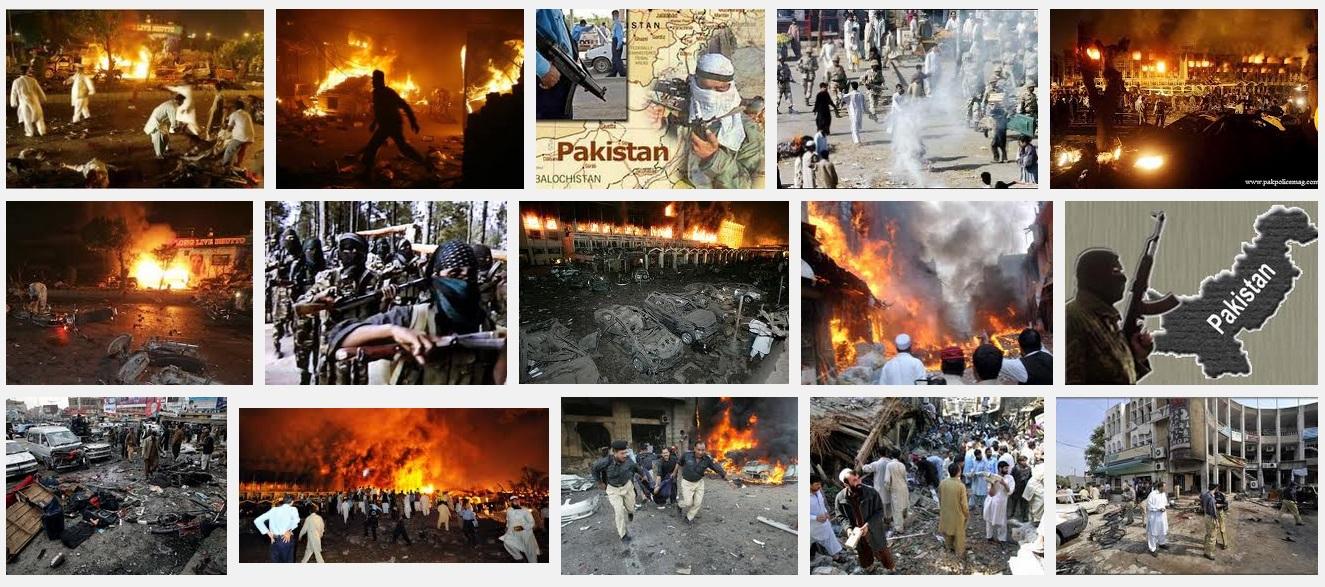
In the present environment of universal turmoil especially in the post 911 scenario, the Muslims have become a target of universal hate propaganda and Pakistan is perceived to be at the core. The extremist justify terrorism under garb of Islam. Thus the ignorant facilitate the anti Muslim lobbies to propagate and project all Muslims as intolerant, war mongers and terrorists.
Despite loss of over 50,000 innocent people in Pakistan, many simple people also fall pray to deviant concepts. Pakistanis are in a state of ideological confusion which is a main hurdle to achieve peace, the basic condition for progress. While countries with much less population and resources have become our donors, we a nuclear power are embroiled in infighting to remain backward. It is customary to put all the blame on foreign conspiracies, while totally ignoring own follies.  The politico-religious wars in Afghanistan, Iraq, Syria, Libya and Tunisia have taken heavy toll also brewing up in Egypt. In order to get Pakistan out of this quagmire some basic issues need to be resolved to evolve a broad consensus among people holding conflicting views.
Three Groups:
“Then We conveyed the Book as an heritage to those of Our slaves whom We chose. Now, some of them are those who wrong their own selves, and some of them are mediocre, and some of them are those who outpace (others) in righteous deeds with Allah‘s permission. That is the great bounty”(Quran;35:32)
Ideologically the Pakistani society at present can be divided in to three main groups:
Firstly; the elite and the liberals:
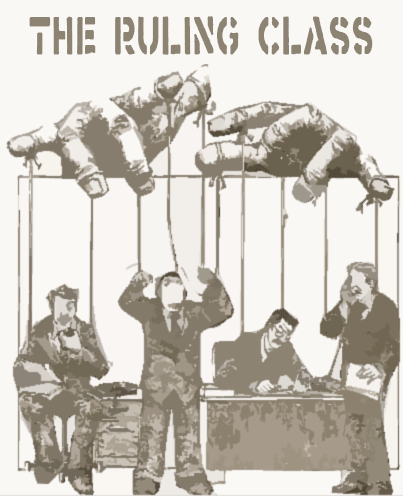
They are less than 1% in numbers but are the most powerful, control more than 50% national wealth while 99% people have to live in poverty at average income of 500 $ per year. It includes politicians, feudal, industrialists, business men, bankers, civil and military bureaucracy, media groups and other mafias controlling other sources of economic and social power. They consider religion as personal affair of an individual and that Islam should be restricted to the mosques for worship, it should have no say in the public affairs like law and social aspects.  Some times they display their religiosity just to get favours form public i.e. to get votes in elections or to change public opinion. They use power, wealth and coercion to crush any resistance to their interests. Here the term “elite” include their supporters, sympathisers and potential candidates form all segments of society to join this club.
The elite include some fascist liberals who consider all the religiously inclined people to be primitive hardliner, fundamentalist, rigid extremists, devoid of intellect, ignorant bigots. They think that religious people are the source of all the ills of society and impediment to progress.
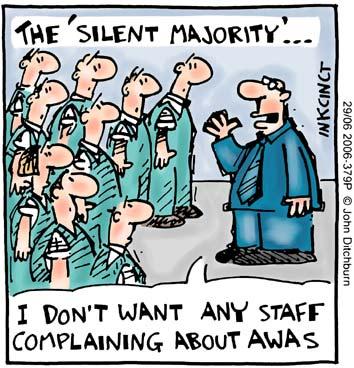
Secondly the Silent Majority:  
“And thus have We made you to be a moderate community, so that (with your lives) you might bear witness to the truth before all mankind, and that the Apostle might bear witness to it before you.” (Quran;2:143).
This is the bulk of population, sandwiched between Elite and Religious Extremists. They are moderate religiously inclined but mostly non practicing Muslims. However they consider that implementation of Islam and Shari’a will provide them social and economic justice and save them for the tyranny of Elite and Extremists.
They revere Islam but lack in practice, laying, deception, fraud corruption is rampant. Some practice Islam in rituals but lack in Haqooq-Al Ibad [service to fellow beings]. They are influenced by moderate Ulema inclined towards Sufi Islamic traditions. Since they are not influential, their voice is lost. They comprise people from all segments of society. Thousands have lost their lives in the terrorist attacks by extremist militants.  
Thirdly: The Muslim Militants & Their Supporters:
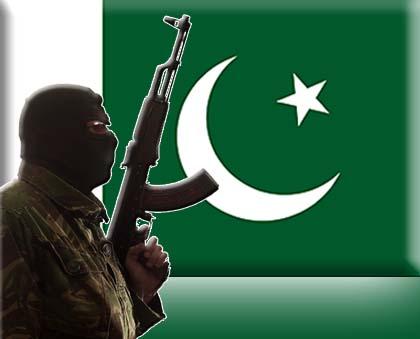
Majority of Muslims desire implementation of Shari’a peacefully through democratic system. However some extremist elements like Taliban has opted to for violence and terrorism as means to this end. They consider killing and terrorism as justified Islamic means, which has been rejected unanimously by all the eminent scholars. However there are people who provide tacit support either in reaction to the existing unjust system of rule or under influence of propaganda.
The Imams and Khateebs of mosques enjoy considerable influence in the society. They enjoy unrestricted freedom to talk what ever they like in the Friday sermons or in other religious gatherings. Since mostly they have limited understanding of the system of governance and politics, their influence has negative impact.
No one dare question them while addressing form pulpit. Unlike Middle Eastern Arabs, Pakistan government has no control over them. Mostly they appear to be favouring the extremists and militants though tacitly. They do not openly condemn the killing of innocent people; use of general phrases is used to satisfy feelings of majority. In the supplications would pray for the success of all struggling in Jihad and for implementation of Shari’a, which no one can dare disagree. Though Islam does not have official clergy like Christianity and other religions, but these Imams think that they may also get a role or share in power once the Shari’a is implemented.
The military or civilians rulers have always been involved in exploitation and oppression of poor people. People deprived of good governance, social and economic justice are ready to welcome any one who promises to address their problems. Their expectations from people with religious overtones are high because of their apparent piety and outlook. They fail to comprehend that governance is beyond their capabilities, terror cannot solve all their problems.
Disjointed Society:

The society is disjointed in the thought, intellectually, politically, socially and even physically to an extent due to yawning social and economic gap. Hence for the peace and progress, of the people of Pakistan, there is dire need to at least close this gap in their “Thought” with in acceptable limits if it can’t be eliminated altogether.   <<<Keep reading >>>
By Aftab Khan: http://Aftabkhan.blog.com
Related
Urdu: http://pakistan-posts.blogspot.com/2013/11/pakistan-basic-issues-need-immediate.html
https://dl.dropboxusercontent.com/u/12798195/FreeBooks/PakistanQuagmare.htm