Featured post

SalaamOne سلام

SalaamOne ,  سلام   is a nonprofit e-Forum to promote peace among humanity, through understanding and tolerance of religions, cu...

Showing posts with label Extremism. Show all posts

Rediscovering Islam with Maulana Wahiduddin Khan

Introduction:

Islam is the eternal faith for all the humanity, irrespective of race, colour or gender. Prophet Muhammad (peace be upon him) did not introduce any new faith, God chose him for reviving and culminating the original faith for all the humanity till eternity. Purpose is attainment of peace through total surrender to the ‘Will of God’ (Islam), the message preached by all the previous messengers, to their respective communities.
The Arabic "Salaam" (سلام) and Hebrew word "Shalom" (שָׁלוֹם), literally mean "peace" and are cognates of each other, derived from the Semitic Triconsonantal of Ś-L-M (realized in Hebrew as Š-L-M and in Arabic as S-L-M). Hence the word ‘Islam’, derived from Arabic root ‘S-L-M,’ meaning 'peace' or ‘submission’. In a religious context it means; ‘attainment of peace through complete submission to the will of God or his laws’. Combination of Arabic.(سلام), Hebrew (שָׁלוֹם), and English ‘Peace’ is also used as “Symbol of Peace”.
Islam is as old as the humanity. Prophet Adam (peace be upon him), the first human was also the first prophet of Islam; Later he sent prophets like Noah, Enoch, Abraham (peace be upon them) and others to guide the humanity, they preached the ‘total surrender and obedience to the will of God’ (Islam). All the messengers preached and practiced the same religion .i.e ‘Submission to the will of God’ (Islam), which is not new to the mankind. Hence all the messengers and prophets along with their followers may be linguistically called as Muslims because their faith was based upon ‘total surrender to the will God’ (Islam). Allah says: “The same religion has He established for you as that which He enjoined on Noah-the which We have sent by inspiration to thee (Muhammad) and that which We enjoined on Abraham Moses and Jesus:...”(Qur’an;42:13); “Behold! Abraham said to his father and his people: "I do indeed clear myself of what ye worship: "(I worship) only Him Who made me and He will certainly guide me." And he left it as a Word to endure among those who came after him that they may turn back (to Allah).”(Qur’an;43:26-28).
The original message of God for guidance of humanity conveyed by messengers of God got distorted with the passage of time only to be revived by an other messenger. Once humanity developed to a certain level, Allah sent the final messenger Muhammad (pbuh) with the final scripture Quran, which is protected by Allah. Even after 1400 years Quran is available in its original revealed form but with the passage of time people lack in understanding the spirit and indulge in practice of undesirable activities; Hence periodically the scholars of Islam make effort to rediscover the original message of Islam for practical application.
We are living in the age of the media. Before the advent of the modern media there were large numbers of people in the world who knew nothing of Islam. With the invention of the printing press and now the electronic media it is difficult to find today a single person who is unaware of it. But there is a clear-cut difference. In previous ages it happened that wherever Islam spread people were so impressed with it that most of them accepted it as their religion. That is why today we find more than one billion Muslims throughout the world. Strangely enough the present day publicity given to Islam has produced only a negative effect. People are now generally allergic to Islam rather than being interested in it writes, Maulana Wahiduddin Khan in his book “Islam Rediscovered”.
Maulana Wahiduddin Khan (born in India 1925) is a noted Islamic scholar and peace activist. He has translated the Quran in simple and contemporary English and wrote a commentary on the Quran and gives lectures on media. He has received many awards.
Maulana Wahiduddin Khan has made it his mission to present Islamic teachings in the style and language of the post-scientific era. Rediscovering Islam himself from its original sources, he has authored over 200 books on Islam, prophetic wisdom and peaceful co-existence in a multi-ethnic society. Some of which are; ‘In Search of God’, ‘Man Know Thyself’, ‘Islam’, ‘The Voice of Human Nature’, ‘Quran: An Abiding Wonder’, ‘Islam and Peace’, ‘The True Jihad’ and ‘Islam Rediscovered’.  
The theme of his book ‘Islam Rediscovered’ is being reproduced here with minor editing is evident from its title, Discovering Islam from its Original Sources. The  purpose of Maulana Wahiduddin is to present Islam as it is, drawing on its original sources rather than judging it by the later day interpretations and commentaries or the practices of present day Muslims in different parts of the world. He has made a distinction between Islam as presented by the Prophet Muhammad, may peace be upon him, and his companions (information about which is available to us in the Qur’an and the Sunnah) and Islam as represented by later Muslim generations — both in theory and practice. This is what he calls the scientific approach.
In previous centuries when Islam was introduced, people used to say: Yes, “Mr. Islam welcome to you!” Now when Islam is presented to them they say: “No thank you.” Why is there this difference? The answer is very simple. In previous centuries Islam was introduced to the people of the world through its scriptures, as it is — without the slightest change in its original message. Whereas in modern times, Islam is being introduced through the negative practices of certain Muslims as reported by the media.
There is a further and more severe problem that of selective reporting. According to their own criteria the media is interested only in ‘hot’ news, although so much ‘soft’ news is available about the Muslim people. Because of their ingrained professionalism, they do not allow this ‘soft’ news to find its way into their columns of their broadcasts.
Islam is the religion of nature. If it were to be presented in its original form, people would turn to it quite naturally. For example, when a recently converted American by the name of Gary Miller was asked why he had converted to Islam, he replied: “I didn’t convert to Islam I have rather reverted to my original religion.” [Islam is the 'primordial religion' (din-al-hanif), it seeks to return man to his original, true nature in which he is in harmony with creation, inspired to do good, and confirming the Oneness of God. Allah says: “Therefore, stand firm in your devotion to the upright faith - the nature made by Allah, the one on which mankind is created - and the laws of Nature ordained by Allah cannot be changed. That is the standard of true faith (ad-den al-qayyim), but most among mankind do not know”.(Qur’an;30:30 similarly 6:161 & 4:125)]
Unfortunately, a section of Muslims is engaged in violent and aggressive activities, wrongfully indeed, in the name of Islam. It is such news as, through the media, has a great impact upon the general public and creates serious misunderstandings. People have come to take Islam as a militant religion. Since modern man is in search of peace, he finds no appeal in a religion which, as presented by the media, is one of hatred and violence.
Maulana Wahiduddin Khan in this book attempts to introduce Islam as it is. It calls for a distinction to be made between Islam and the practices of Muslims. Taking a scientific attitude, you have to see Islam in the light of the Islamic scriptures and not judge it by Muslim conduct.
For surely, if you want to know what democracy is, you will examine the ideology of democracy as established by its champions. You will not form an opinion about the democratic system merely on the basis of observing some self-styled democratic nation. Everyone who wants to know what Islam is, should follow this scientific method while trying to form his opinion on Islam.
We are living in an age of information. This is the age of the knowledge explosion. Today, everyone wants to know more and more about everything, including religion. The result is that, on the subject of religion, people are far better informed than ever before. But there is a difference. About other religions, people generally know what is enshrined in their religious books. Whereas the case of Islam is the opposite. Their information about Islam is derived from unauthentic sources. The reason for this lies with the Muslims and not with anyone else.
The Muslims of modern times are engaged in violence everywhere in the name of Islam. Violence, however, is not limited only to Muslims. It is found in every community and in every group. But there is a basic difference between the two. When the adherents of other religions engage in violence, they do not do so in the name of their religion. But the violence engaged in by the Muslims is being done in the name of Islam.
These violent activities of the Muslims reach the people through the media. As modern media is a “hot news”-based industry, these violent events are flashed in the media. For this reason, people come to regard Islam as a religion of violence. It is only among Muslims that all violent activities are carried out in the name of religion. In practice, only a tiny minority of Muslims is engaged in such violent activities. However, since other Muslims neither condemn these activities, nor disown them outright, it is but natural for people to attribute their violent propensities to their religion. But the scientific way of study is to distinguish Islam from the deeds of Muslims, just as the ideology of democracy is studied by distinguishing it from the acts of democratic countries.
The aim is to present Islam as it is enshrined in its sacred scriptures, so that it may be brought before the people in its true form. The authentic source of information about Islam is the Qur’an. The Qur’an, according to Muslim belief, was revealed by God to the Arabian Prophet Muhammad, may peace be upon him. The second source of knowledge about Islam is the Sunnah, i.e., the words, deeds and sanctions of the Prophet Muhammad, may peace be upon him. The lives of the companions of the Prophet provide another later source. Then, there is a full stop in this matter. No other person or historical record enjoys the status of source of Islam.
However, this write up does not claim to be a comprehensive introduction to Islam. That is something which can be had only by studying Islam directly through its basic scriptures, that is, the Qur’an and Sunnah. This effort thus presents a fundamental introduction for those who want to understand Islam as it is. Its aim is to provide a proper background in the light of which the original sources of Islam may be studied.

It is hoped that this information will be useful for those who want to know about the original Islam, as opposed to the “religion” represented by certain self-styled Muslim leaders introduced to us by the media.
Read / download full book or in part: http://goo.gl/41ky3n

* * * * * * * * * * * * * * * * * * *
Humanity, Religion, Culture, Ethics, Science, Spirituality & Peace
Peace Forum Magazines
Over 1,000,000 Visits
* * * * * * * * * * * * * * * * * * *

Statusquo or Change


WHEN considered as an agent of social, economic or political change, activism possesses an anti-status quo value. Nonetheless it can also entail efforts that are meant to impede a change or maintain the status quo. In either case it contributes to the shaping of attitudes and behaviour of individuals, groups, institutions and states.
It is difficult to measure the impact of activism in terms of change, particularly during times of protracted crises or turmoil. After civilian protests and uprisings gripped the countries of the so-called Arab Spring, many expected that long-term changes would come about there. But eventually, most of these ‘processes of change’ culminated in an unexpected return to the status quo.
Activism can have both positive and negative consequences of varying degrees over short, medium and long periods of time. Again, it is difficult to identify the required methods and amount of activism which could bring about the desired change. Many believe that change is a natural and spontaneous process and can by itself open up new vistas, but it largely depends on the vision of the leaders and activists in which direction they will direct the change.
Multiple processes of activism are gaining ground in Pakistan with political and religious parties leading the recent discourse on activism. Social welfare and rights groups are also quite active in Pakistan, but ultimately they contribute to enriching existing religious and political discourses. Their activism has yet to create the sort of synergy and ‘social acceptance’ that can have an impact on the ongoing processes of socio-cultural and political change in society.
Political and religious parties are leading the recent discourse on activism.
The anti-government agitation movements of the Pakistan Tehreek-i-Insaf (PTI) and Pakistan Awami Tehreek (PAT) represent the most recent spate of political activism in Pakistan. Jamaat-i-Islami and Deobandi religious-political parties are trying to reinvigorate their traditional mode of activism and politics of alliances with a view to responding to emerging internal challenges in the country. The JI’s moot in Lahore and the Deobandi parties’ recently reached agreement to respond collectively to common challenges can be seen in this perspective.
Political and religious activism not only have broader spaces available in the country, they, in fact, are correlated and complement each other. This was seen in the recent demonstrations by the PTI and PAT where both parties developed mutual coordination despite their different normative backgrounds.
The recent wave of activism is also conceived as the ultimate outcome of the power struggle within different institutions where old and new power stakeholders want to determine their share in the power structure of the country.
Much has been written on the recent political crisis in terms of ‘class conflict’ suggesting that newly emerging middle classes not only want to see some quick fixes to many structural problems facing the country but also want to play a role in political affairs.
The argument is supported by evidence that the ongoing political activism is confined to major urban centres where the neo middle class has larger concentrations. Also, an increasing rift between traditional and neo middle classes can be seen in urban centres.
The character of the traditional middle class is changing in many ways. This class was mainly the product of the industrialisation of 1960-80 and dependent on the means of production. It was based in the central and coastal parts of the country. Few of their segments have entered the modern and hi-tech phase of industrialisation, and they need to see adjustments and reforms in the current economy and trade policies of the state.
During the last two decades, the services-based middle classes expanded, giving birth to a new culture of consumerism. The consumer economy has impacted the behaviour of the middle classes that need a consumer-friendly economy and culture. Not only do the middle classes want an expansion in the services sector they also want a change in the economic structure.
Apart from the emerging education structures and changes in social norms, the Pakistani diaspora has also played the role of a catalyst in shaping the behaviour of the consumer middle class. Most diaspora communities are engaged in the services sector or are part of the labour industry abroad.
Apparently, conflict of interest between these middle classes is based on consumer vs production socio-economic interests. The PTI represents the neo middle class, which wants a complete shift in the political-economic approach of the state.
The PML-N presents itself as the custodian of the interests of another segment of the middle class. The boundaries of these classes and their political behaviour overlap in places, but their domains are getting clearer. Interestingly, the parties, which claim to represent the lower classes of the country, mainly the rural communities, are suffering as the political discourse is being shaped largely by the major urban centres. Of course, media plays an important role in shaping political views, which are supportive of the urban political discourse.
Another significant factor is the social media, which is shaping urban-based political narratives. These narratives support neo middle-class interests, and the PTI has brought virtual activism into the streets.
But the PTI is not diversifying its political strategies, and it appears as if the party is caught up in the romance of agitation and activism. This reflects the dichotomy of the PTI elite’s political behaviour. The elite want full authority to implement their agendas and do not regard a provincial government sufficient to demonstrate their capacities.
The social and religious profiles of the middle classes create space for religious, political activism. The average Pakistani wants to be progressive in a conservative framework, and religious-political parties, and to some extent mainstream urban-based parties exploit these sentiments. Rightly or wrongly, the religious-political parties always consider themselves as agents of change but do not prove themselves the real competitors of mainstream political parties. Through their politics and activism they win hearts of the people but the minds remain with the political parties.
This creates space for alliances between mainstream right-wing political parties and religious-political parties. Through such alliances, the space shrinks for secular, liberal parties.
The romance of activism; by Muhammad Amir Rana, dawn.com
The writer is a security analyst.

Lagos, Nigeria:on the edge of violence


THREE strangers on a beach in Lagos, Nigeria. A scientist with a tumultuous marriage, a rap star trying to find quiet and a military man desperate to contact his family. Each is there searching for solace, each with her or his distinct, complicated life. `Fast and quiet as a whisper,` a huge wave drags them into the water, as if `the ocean had opened its great maw and swallowed` them. But they do not drown. Instead they find themselves alive and unhurt back on the beach after a strange encounter with extraterrestrials, an encounter that changes each of them unequivocally, and sets them on a path to save the city of Lagos, in Nnedi Okorafor`s novel Lagoon.

The strange alien life form falls from the stars and into the sea around Nigeria, cleansing it and giving it new life. The aliens have given the sea creatures whatever it was they have asked for, leaving the lagoon now full of massive spiked octopi, monstrous swordfish and sweet, sweet water that now heals `the worst human illnesses and [will] cause a hundred more illnesses not yet known to mankind.` But they do not want to `rule, colonise, conquer or take.` According to their first ambassador Ayodele, they `just want a home.` Ayodele is the first shapeshifting alien to take human form and talk to the three people on the beach Adaora, Agu and Anthony. `You people call me an alien because I am from space, your outer heaven, beyond,` Ayodele tells them. `I am what you all call an ambassador, the first to come and communicate with you people. I was sent.` It takes a single physical transformation for her to convince the three humans that they must use their wits to navigate the chaos fast descending over Lagos to get Ayodele to the Nigerian president, if she and her people are to help Nigeria become all that it is capable of.
The simplest description of Lagoon would be to call it a classic alien invasion story.

Okorafor uses a number of classic tropes of the genre, often with tongue planted firmly in cheek there is even a `take me to your leader` scene (actual words used, and hilarious) when the Nigerian president asks to see the elders of the alien race. Lagoon`s characters are all brightly painted not even the ones with supporting roles are anything less than full technicolour. From Adaora`s confused and angry husband who suspects his wife is a marine witch, to the priest who decides that the aliens must join his flock, proclaiming that he has `been chosen to bring this creature and all of her kind into the light,` each of Lagoon`s characters is complicated and richly imagined.

As Ayodele says, `You people are very interesting.
Part of what makes Lagoon an entirely original alien invasion story is the very fact that it is set in Lagos instead of the usual suspects: New York, LA, London, Paris.Lagos often seemed a great deal like Karachi: big, confusing, bursting full of people of every possible sort and always on the edge of violence. It is described as `the city where nothing works yet everything happens,` a concept familiar to Karachiites.

Imagine an alien invasion in such a city, a city entirely accustomed to power breakdowns, lack of clean water, hideous violence and extreme poverty. Reactions to confusion created by an invasion are likely to be very different than in a city where even a basic power cut can cause some form of societal breakdown. It`s even possible that the residents of a city like Lagos (or, I repeat, Karachi) may well have greater survival skills in the face of an alien threat. Of course, it may also mean that xenophobia is more extreme all the better for conflict, drama and action in Lagoon, of course.

Okorafor never holds back, not with her ideas and not with her language. She slips into Nigerian pidgin easily when it is appropriate for her characters, never stopping to explain the vernacular (there is a glossary included for those who need it, but the pidgin isn`t hard to follow and definitely doesn`t take away from the ease with which the dialogue flows). Lagoon also freely shifts perspectives, not just between the main characters but also at times to connect a number of Nigerian myths to the main story. The citywide chaos reaches fever pitch, especially when all sorts of old gods wake once the aliens are in Lagos, including a horrific road monster called the Bone Collector that rises up `like a huge snake-like slab of concrete, the faded yellow stripes still in view` and quite literally swallows dozens of people.

The violence never comes from the aliens though they, in fact, try to stall it. It is an alien in human form who saves theLagosians from the Bone Collector, offering herself to satisfy its immense hunger. `I am everything and I am nothing,` says the alien woman, who is then `pulled into the road`s hot flesh,` until it is finally satisfied, shuddering and stretching with the `relieved sigh of millions of ghosts.

This combination of myth and aliens, of ancient stories and new futures, is what Nnedi Okorafor`s writing is all about. Her last book was a collection of short stories called Kabu Kabu, each story contemporary yet deeply resonating the myth and magic of Nigerian culture. In 2011, she won the British Fantasy Award for best novel for Who Fears Death, a frightening and powerful story set in post-apocalyptic Sudan that wove together both Igbo mythology, conflict and yes, change. In Lagoon, this change comes in a different form: `You are evil, shouts one Lagosian bystander to Ayodele, who replies succinctly, `I am not. I am change.

Lagoon is a first contact, alien invasion story in the best of all possible ways. There is great joy in Okorafor`s writing, a clear enjoyment of both the genre and the boundaries she constantly pushes at. First contact science fiction stories are often heavy, sobering tales of politics and economics, traditionally exploring xenophobia, and while Lagoon is no less an intelligent comment on all of the above, it is never heavy-handed with morality. Okorafor doesn`t judge people for their lifestyle choices and there are all sorts of lifestyles represented in Lagoon but she does judge the corruption and violence that has infiltrated Nigeria in this case a place representative of so many other developing countries. Lagoon is both socio-politically and environmentally aware, without ever letting go of the strongmythological narratives that form the core of Nigerian culture. Okorafor may be looking to the future for the city she loves, but she knows its strength lies in its ancient soul. 
by Mahvesh Murad, Dawn

World's Most Crime-Ridden Internet Network Found in Nigeria

www.youtube.com/watch?v=TkoMxQmmHZI
Mar 21, 2013 - Uploaded by BattaBox
(Real-Life Nollywood - Nigeria Spam) Nigeria has a bad 

  • lagos nigerian crime - YouTube

    www.youtube.com/watch?v=lqgLuCgQmbQ
    Mar 26, 2014 - Uploaded by Gerald Hill
    This crime scene in Southeast Washington dc happens often, isnigeria like this. offer your comments.
  • Jungle Justice: Two Burnt Alive In Lagos For Alleged ...

    www.youtube.com/watch?v=WZ3bRoqVNfs
    Aug 6, 2013 - Uploaded by Wintv Microres
    Jungle Justice: Two Burnt Alive In Lagos For Alleged Robbery - Festour ... in Nigeria? what does this jungle justice say aboutNigeria's criminal ...
    1. LagosNigeria The Africa You Dont See On Television Pt 1 ...

      www.youtube.com/watch?v=ot1JtsOtDqA
      Jan 31, 2012 - Uploaded by ♥Haitian Sensation♥
      LagosNigeria The Africa You Dont See On Television Pt 1 .... who came to the new world..the crime rate in india is horrendous too in the usa in ...
    2.                   Peace-Forum Network 

    Pakistan’s Quagmire: Exploring the Way out for Peace & Progress: By Aftab Khan

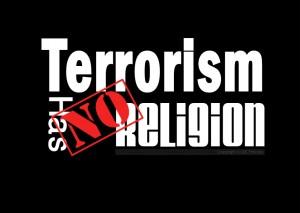
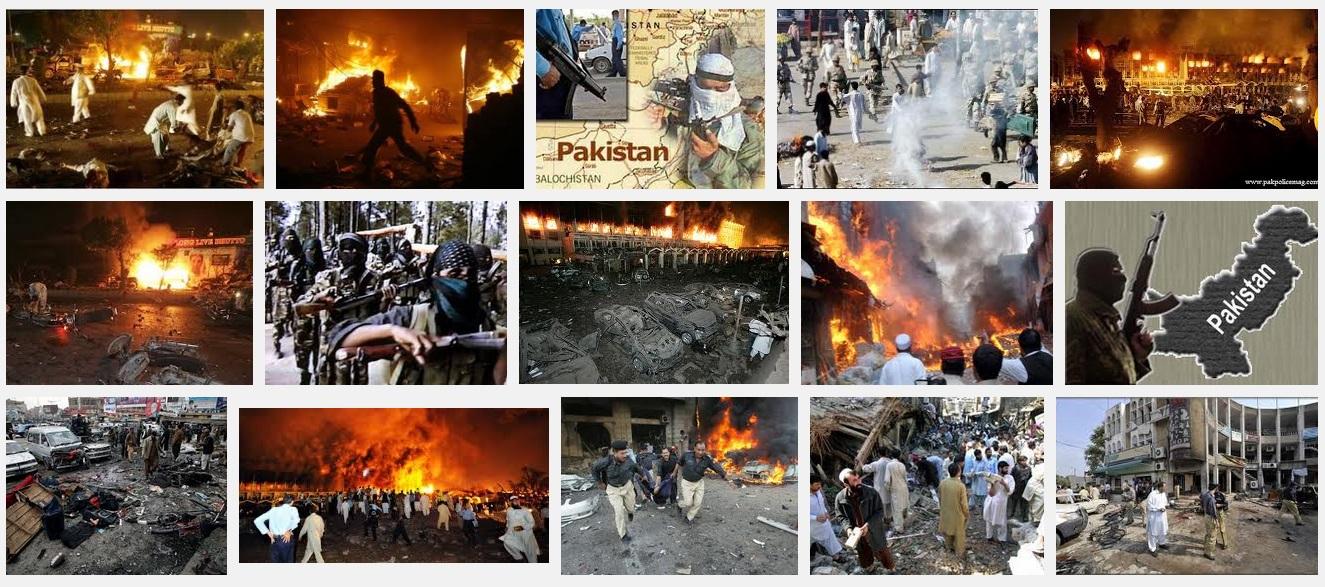
    In the present environment of universal turmoil especially in the post 911 scenario, the Muslims have become a target of universal hate propaganda and Pakistan is perceived to be at the core. The extremist justify terrorism under garb of Islam. Thus the ignorant facilitate the anti Muslim lobbies to propagate and project all Muslims as intolerant, war mongers and terrorists.
    Despite loss of over 50,000 innocent people in Pakistan, many simple people also fall pray to deviant concepts. Pakistanis are in a state of ideological confusion which is a main hurdle to achieve peace, the basic condition for progress. While countries with much less population and resources have become our donors, we a nuclear power are embroiled in infighting to remain backward. It is customary to put all the blame on foreign conspiracies, while totally ignoring own follies.  The politico-religious wars in Afghanistan, Iraq, Syria, Libya and Tunisia have taken heavy toll also brewing up in Egypt. In order to get Pakistan out of this quagmire some basic issues need to be resolved to evolve a broad consensus among people holding conflicting views.
    Three Groups:
    “Then We conveyed the Book as an heritage to those of Our slaves whom We chose. Now, some of them are those who wrong their own selves, and some of them are mediocre, and some of them are those who outpace (others) in righteous deeds with Allah‘s permission. That is the great bounty”(Quran;35:32)
    Ideologically the Pakistani society at present can be divided in to three main groups:
    Firstly; the elite and the liberals:
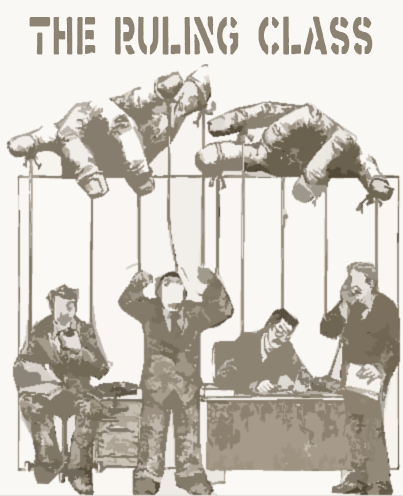
    They are less than 1% in numbers but are the most powerful, control more than 50% national wealth while 99% people have to live in poverty at average income of 500 $ per year. It includes politicians, feudal, industrialists, business men, bankers, civil and military bureaucracy, media groups and other mafias controlling other sources of economic and social power. They consider religion as personal affair of an individual and that Islam should be restricted to the mosques for worship, it should have no say in the public affairs like law and social aspects.  Some times they display their religiosity just to get favours form public i.e. to get votes in elections or to change public opinion. They use power, wealth and coercion to crush any resistance to their interests. Here the term “elite” include their supporters, sympathisers and potential candidates form all segments of society to join this club.
    The elite include some fascist liberals who consider all the religiously inclined people to be primitive hardliner, fundamentalist, rigid extremists, devoid of intellect, ignorant bigots. They think that religious people are the source of all the ills of society and impediment to progress.
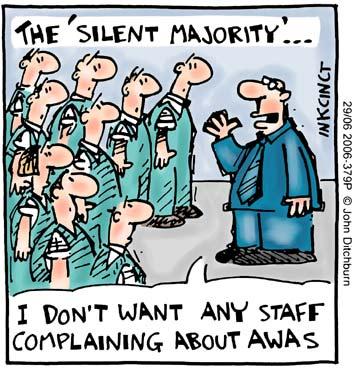
    Secondly the Silent Majority:  
    “And thus have We made you to be a moderate community, so that (with your lives) you might bear witness to the truth before all mankind, and that the Apostle might bear witness to it before you.” (Quran;2:143).
    This is the bulk of population, sandwiched between Elite and Religious Extremists. They are moderate religiously inclined but mostly non practicing Muslims. However they consider that implementation of Islam and Shari’a will provide them social and economic justice and save them for the tyranny of Elite and Extremists.
    They revere Islam but lack in practice, laying, deception, fraud corruption is rampant. Some practice Islam in rituals but lack in Haqooq-Al Ibad [service to fellow beings]. They are influenced by moderate Ulema inclined towards Sufi Islamic traditions. Since they are not influential, their voice is lost. They comprise people from all segments of society. Thousands have lost their lives in the terrorist attacks by extremist militants.  
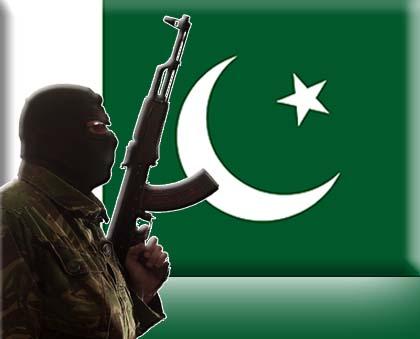
    Thirdly: The Muslim Militants & Their Supporters:
    Majority of Muslims desire implementation of Shari’a peacefully through democratic system. However some extremist elements like Taliban has opted to for violence and terrorism as means to this end. They consider killing and terrorism as justified Islamic means, which has been rejected unanimously by all the eminent scholars. However there are people who provide tacit support either in reaction to the existing unjust system of rule or under influence of propaganda.
    The Imams and Khateebs of mosques enjoy considerable influence in the society. They enjoy unrestricted freedom to talk what ever they like in the Friday sermons or in other religious gatherings. Since mostly they have limited understanding of the system of governance and politics, their influence has negative impact.
    No one dare question them while addressing form pulpit. Unlike Middle Eastern Arabs, Pakistan government has no control over them. Mostly they appear to be favouring the extremists and militants though tacitly. They do not openly condemn the killing of innocent people; use of general phrases is used to satisfy feelings of majority. In the supplications would pray for the success of all struggling in Jihad and for implementation of Shari’a, which no one can dare disagree. Though Islam does not have official clergy like Christianity and other religions, but these Imams think that they may also get a role or share in power once the Shari’a is implemented.
    The military or civilians rulers have always been involved in exploitation and oppression of poor people. People deprived of good governance, social and economic justice are ready to welcome any one who promises to address their problems. Their expectations from people with religious overtones are high because of their apparent piety and outlook. They fail to comprehend that governance is beyond their capabilities, terror cannot solve all their problems.
    Disjointed Society:

    The society is disjointed in the thought, intellectually, politically, socially and even physically to an extent due to yawning social and economic gap. Hence for the peace and progress, of the people of Pakistan, there is dire need to at least close this gap in their “Thought” with in acceptable limits if it can’t be eliminated altogether.   <<<Keep reading >>>
    By Aftab Khan: http://Aftabkhan.blog.com
    Related
    Urdu: http://pakistan-posts.blogspot.com/2013/11/pakistan-basic-issues-need-immediate.html
    https://dl.dropboxusercontent.com/u/12798195/FreeBooks/PakistanQuagmare.htm